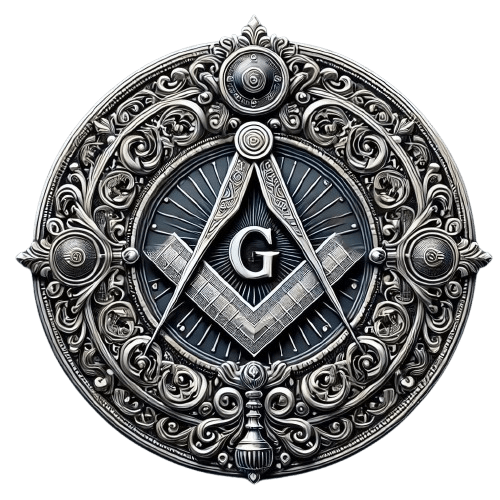
The phrase "third degree" has passed into common English as a synonym for intense questioning — as in "give someone the third degree." Most people who use it have no idea where it came from. It came from Freemasonry. Whether that etymology flatters the fraternity is debatable. What is not debatable is that the three degrees of the Craft are something considerably more serious than an idiom suggests.
What a Degree Is
In Freemasonry, a degree is an initiation — a structured ceremonial experience that a candidate receives rather than passes. The word itself is old; in the context of the medieval stonemasons' guilds from which the fraternity traces its symbolic heritage, a degree marked a stage of learning: apprentice, journeyman, master. Freemasonry adopted that structure and gave it moral content.
Each of the three degrees uses the tools and traditions of the ancient stonemason's trade as symbols for how a man ought to build himself. The candidate is not being tested on what he knows. He is being shown something — through ceremony, symbol, and carefully chosen language — that is meant to stay with him and work on him over time. The degrees are designed to be experienced, not just heard.
They are also designed to be received in order. Each builds on what came before. A man cannot receive the Fellow Craft degree until he has received the Entered Apprentice degree, and cannot receive the Master Mason degree until he has received both. This is not a bureaucratic requirement. It is the point. The three degrees form a sequence, and the sequence matters.
The First Degree: Entered Apprentice
The Entered Apprentice is the first degree, the degree of initiation. A man who receives it is introduced into the fraternity for the first time — into its principles, its symbols, and its obligations. The working tools associated with this degree are the twenty-four-inch gauge and the common gavel. In the symbolism of the operative craft, these were the apprentice's most basic instruments: one for measuring, one for shaping rough stone. In the speculative fraternity, they represent the division of a man's time and the work of clearing away the roughness that keeps him from being what he ought to be.
The Entered Apprentice is a full member of his lodge in one specific sense: he has taken his obligation, he belongs to the fraternity. But his membership is not yet complete. He has been introduced; the deeper work is still ahead.
The Second Degree: Fellow Craft
The Fellow Craft degree takes the candidate further. Where the Entered Apprentice degree focused on the basics of the Craft and the formation of character, the Fellow Craft degree moves into the realm of learning and reason. Its working tools are the square, the level, and the plumb — instruments of precision, each with its own symbolic meaning. The square tests right angles, and by extension the rightness of conduct. The level finds the horizontal plane, and by extension the equality of all men in lodge. The plumb finds the vertical, and by extension the uprightness that ought to govern a man's life.
The Fellow Craft degree is sometimes called the middle degree, and in a sense it is: it occupies the space between introduction and completion, between the first lessons and the full understanding that the third degree will bring.
The Third Degree: Master Mason
The Master Mason degree is the summit of the blue lodge degrees and the completion of a man's foundational Masonic education. Its working tool is the trowel — the instrument that spreads the cement binding the stones of a building together — and its lesson is the one that gives the degree its weight: that the brotherhood of the Craft is something worth preserving, worth sacrificing for, worth keeping faith with even under the hardest pressure.
At the heart of the third degree is one of the oldest narratives in Freemasonry, the legend of Hiram Abiff — the master builder of Solomon's Temple, as described in the Biblical accounts of Kings and Chronicles. The legend, which has been written about extensively in mainstream Masonic scholarship and is widely known outside the fraternity, teaches through dramatic form what the tools of the degree teach symbolically: that a man of integrity maintains his principles when it costs him something. The lesson is not comfortable. It is not meant to be.
A man who has received the Master Mason degree is a full member of his lodge. He can vote, hold office, petition for appendant bodies, and visit any regular lodge in the world as a recognized brother. The three degrees together constitute the full initiation into Freemasonry. Everything else the fraternity offers is built on top of them.
What the Degrees Are Not
The three degrees are not a ladder to power or secret knowledge. There is a persistent popular belief that the blue lodge degrees are merely the beginning — that the "real" Masonry, with its genuine secrets and true inner circle, begins at some higher level accessible only to the initiated few. This is incorrect, and the fraternity has said so clearly and repeatedly.
The Scottish Rite, which confers degrees numbered up to the 32nd, is not "higher" than the blue lodge in any meaningful sense. It is additional — a separate appendant body with its own system of degrees, its own focus, and its own traditions. But a 32nd-degree Scottish Rite Mason who has never taken an active interest in his blue lodge has, by most measures, gotten less out of the fraternity than a Master Mason who has. The degrees the blue lodge confers are not the prologue. They are the thing itself.
The degrees are also not a secret. The existence of the ceremonies, their general structure, and the moral lessons they convey are freely discussed by Masons and have been written about extensively in published works for over two centuries. What a Master Mason keeps private is the specific content of the ritual — the words, the forms, the details — not because they are dangerous, but because some things teach better as experience than as description. A man who reads a complete transcript of a degree ceremony and then receives it will not have the same experience as a man who enters the room without knowing what to expect. The lodge is protecting the candidate's experience, not a state secret.
The Ashlar
Masonic lodges display two stones in their symbolic furniture: the rough ashlar and the perfect ashlar. The rough ashlar is an unfinished stone, just as it came from the quarry. The perfect ashlar is smoothed and squared, ready to take its place in the building. Together they represent the work of Freemasonry: a man enters the fraternity rough, and the degrees — and the years of reflection and practice that follow them — are meant to shape him toward something better. That is what the three degrees are for. Not credentials. Not access. The work itself.
SOURCES & REFERENCES
Grand Lodge of Colorado A.F. & A.M. — coloradofreemasons.org
George Washington's Mount Vernon, Freemasonry — mountvernon.org
Albert G. Mackey, Encyclopedia of Freemasonry (1873; widely reprinted)
Pietre-Stones Review of Freemasonry — freemasons-freemasonry.com